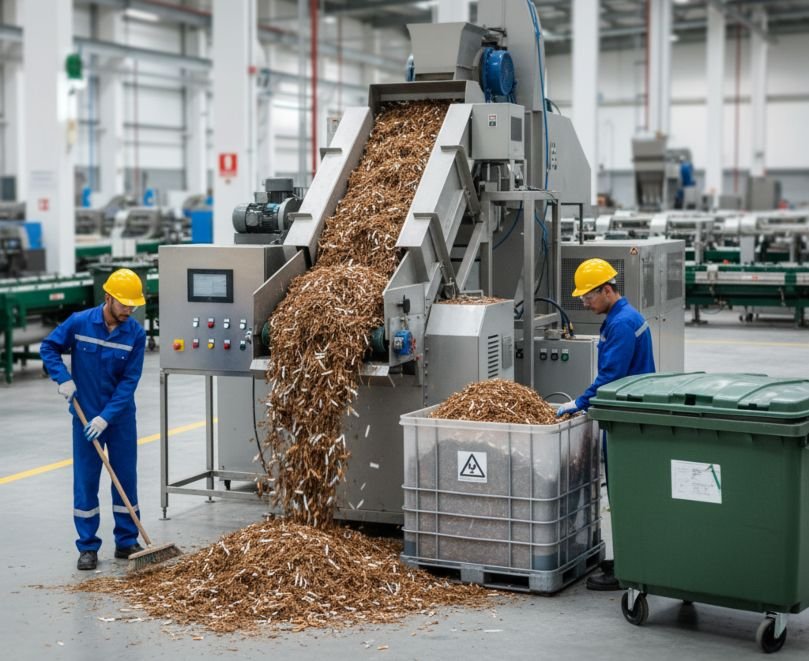
A tobacco processing factory transforms cured leaves into ready-to-use cut filler. Strict moisture control, blending accuracy, and gentle handling protect quality at every step.
The process divides into green leaf threshing and primary processing. Each stage uses specialized industrial machinery designed for high volume and consistent results.
Green Leaf Threshing Stage
Cured tobacco arrives in bales or cartons. Workers and machines first unpack and tip the leaves for better handling.
Conditioning cylinders add steam and moisture. This softens brittle leaves so they do not shatter during later separation.
Threshers use rotating blades and fixed teeth. They gently strip the soft lamina from the tougher stem without excessive breakage.
Pneumatic classifiers separate light lamina from heavier stem pieces. Unthreshed material returns for further passes until clean separation.
Redryers lower moisture to safe storage levels around 11–13 percent. Controlled hot air and cooling chambers stabilize the product for aging or primary use.
Primary Processing Stage
Aged tobacco enters primary processing for final preparation. Bale slicers cut compressed blocks into manageable slices first.
Conditioning and casing drums restore moisture and apply sauces. These sugary or flavored liquids enhance taste and improve leaf flexibility.
Blending silos mix different grades and types. Virginia, Burley, Oriental, and reconstituted tobacco combine according to exact brand recipes.
Precision cutters shred the blended leaf into uniform strips. Typical cut width ranges from 0.8 to 1.2 millimeters for cigarette filler.
Dryers reduce moisture to the target level, usually 12–14 percent. Cooling cylinders then lower temperature before final flavoring.
Top-flavoring drums spray additional aromas or menthol. The finished cut filler moves to storage or directly to cigarette-making machines.
Key Industrial Machinery Overview
Modern factories rely on automated, high-capacity equipment. Sensors monitor moisture, temperature, and flow in real time.
- Conditioning cylinders restore pliability with steam and controlled humidity.
- Threshers and multi-stage classifiers separate lamina from stem efficiently.
- Redrying lines dry, cool, and recondition tobacco for stable storage.
- Bale slicers and openers prepare compressed tobacco for processing.
- Cutting machines produce consistent shred width for even burning.
- Blending silos and metering systems ensure uniform recipe accuracy.
- Rotary dryers and cooling drums finalize moisture and temperature.
- Flavoring applicators add casing and top notes precisely.
| Stage | Main Purpose | Key Machinery | Critical Control |
|---|---|---|---|
| Green Leaf Threshing | Separate lamina from stem | Threshers, classifiers, redryers | Moisture 11–13% |
| Conditioning & Casing | Soften leaf and add sauces | Conditioning drums, spray systems | Moisture 18–22% |
| Blending | Create consistent brand recipe | Blending silos, feeders | Exact grade ratios |
| Cutting | Produce uniform shreds | Tobacco cutters | Cut width 0.8–1.2 mm |
| Drying & Cooling | Stabilize moisture and temperature | Dryers, cooling cylinders | Final moisture 12–14% |
| Flavoring | Apply final aromas | Flavoring drums | Even distribution |
Quality and Efficiency Factors
Dust extraction systems keep the environment clean. Foreign-matter detectors remove non-tobacco materials before they reach cutters.
Automation reduces human error and improves yield. Continuous monitoring helps maintain the exact specifications each brand requires.
Waste such as fine dust and short stems often becomes reconstituted sheet. This material returns to the blend and improves overall efficiency.
Final Overview
A tobacco processing factory turns variable natural leaf into standardized cut filler. Precise machinery and controlled stages deliver consistent quality for cigarette production.